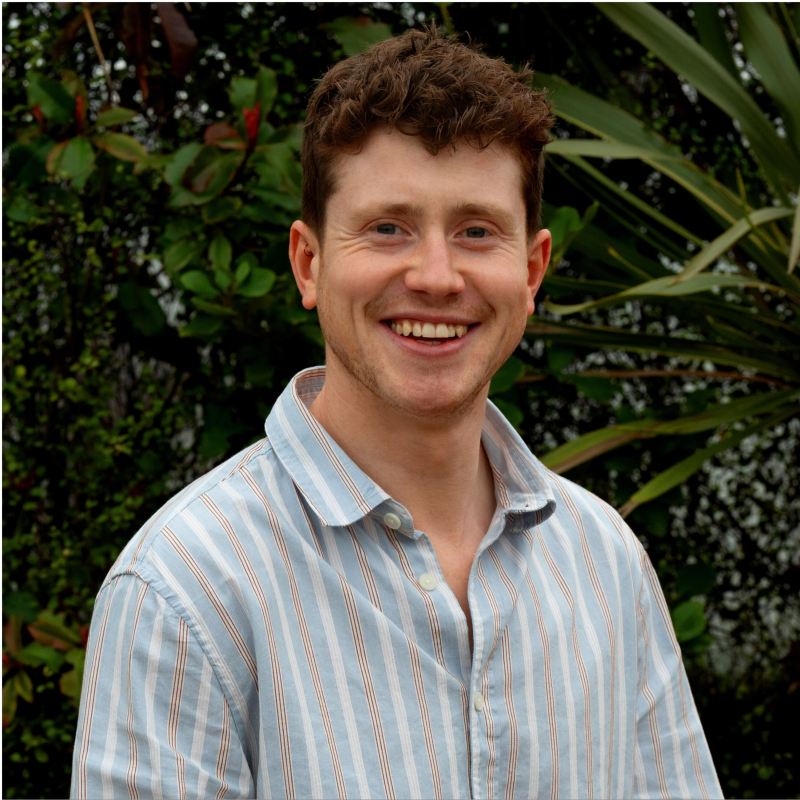
"I genuinely feel like if you hadn't brought me into the program... I don't think my journey would have been this direction. I didn't love my job before, I wasn't happy in my work and now I literally think my life is great."
— Dr Benedict Turner
The Journey
From clinic to acquisition.
Clinical Medicine
Working as a physician and completing a clinical PhD while considering the next direction for his career.
Exploring Digital Health
The fellowship gave Ben exposure to product, innovation and the digital health community.
Founded Automedica
Ben went on to found Automedica with Henry Bergman.
Acquired by Heidi
Founded Automedica, which was acquired by Heidi.
The Full Story
Turner's story.
The Problem
Like many clinicians, Ben found himself in a career that looked impressive on paper but felt hollow in practice. Despite training at one of the world's top medical schools and pursuing a PhD at Imperial, he wasn't happy in his work. The traditional medical career path — years of training, limited autonomy, and little room for innovation — left him questioning whether there was a different way to make an impact in healthcare.
The BiteLabs Catalyst
BiteLabs gave Ben his first real exposure to the world of digital health and health technology. Through the fellowship, he connected with founders, investors, and industry leaders who showed him that clinicians don't have to stay in traditional roles to change healthcare. The programme didn't just teach skills — it shifted his entire perspective on what was possible.
Building AutoMedica
Ben co-founded Automedica with Henry Bergman, applying his clinical perspective to a healthcare technology venture.
The Acquisition
Founded Automedica, which was acquired by Heidi.
What This Means
Ben's story shows one clinician's route from clinical practice into founding a healthcare technology company.
Joining BiteLabs
In December 2023, Ben came across BiteLabs and applied. Not with a grand plan. Not with a startup idea already formed. Simply because he wanted to explore.
What BiteLabs gave him wasn't a business plan. It was something harder to manufacture: exposure to real-world impact.
Ben was paired with another fellow, Eva, and assigned to work with Visiba Care, a Nordic digital health company working with large-scale clinical triage datasets. Together, they analysed patient data, generated insights, and presented their findings to hundreds of people at Demo Day.
The BiteLabs programme also gave Ben something practical: a working knowledge of Git, software engineering basics, and exposure to concepts like product-market fit, clinical product management, and the scale that healthtech companies can achieve.
From early projects to Automedica
His first project — a varicose vein EHR built with GPT-4, complete with OCR patient sticker recognition — didn't sell. But it taught him he could build.
His second project came from a chance meeting at his PhD with a more technical colleague, Henry. Together they built VascularBot: an AI history-taking tool for vascular surgery. They took it to a conference. Someone in the audience raised their hand.
"You're aware, of course, that this is a medical device."
They weren't. But that moment launched their education in the MHRA regulatory landscape. They built a knowledge graph architecture on top of NHS guidelines — NICE, BNF, NICE Clinical Knowledge Summaries — and called the product Smart Guideline.
They applied to the MHRA AI Airlock regulatory sandbox. They got in.
Automedica was lean by necessity. Henry ran the model off his own GPU-equipped supercomputer and storage was handled through a Hugging Face workaround.
They had about 30 users generating product feedback. Two PhD students doing everything — the product, the regulatory submissions, the academic work, the accounting (badly, Ben admits).
The path to Heidi
The path to Heidi began in a WhatsApp group — the AI and the NHS group, widely followed in the UK digital health community.
Automedica was preparing to self-certify as a medical device and needed a small amount of capital for penetration testing. Ben reached out to a few healthtech companies about an API licensing arrangement.
One of them was Heidi.
What followed was a period of technical evaluation — comparing models, stress-testing outputs, assessing regulatory capability. Heidi had early experience with knowledge graphs. Automedica had MHRA AI Airlock credentials and a rigorous LLM evaluation framework.
The deal was, in Ben's words, an acquihire. The amount was not disclosed.
Watch the Interview
Hear it from Turner.
BiteLabs interview with Dr Benedict Turner
Source video: YouTube — BiteLabs interview with Dr Benedict Turner.
Inspired?
Ready to write
your story?
Dr Benedict Turner started exactly where you are now. The BiteLabs fellowship gave him the network, skills, and confidence to build something extraordinary.