Healthcare AI teams rarely struggle to find engineers. What they struggle to find is the right clinicians, at the right moment, working to a review process that produces data they can actually trust.
The requests are familiar to anyone building in this space. A radiology start-up needs chest X-rays graded by consultant radiologists. A clinical LLM team wants to know whether its model's medication advice is safe. An AI scribe company suspects its notes miss things, but can't show where.
That gap is why DeepLabel exists. Like BiteLabs, it is part of BiteWorld Ltd, and it was set up to give healthcare AI companies the clinical expertise they need to build, test and improve their products.
What DeepLabel does
DeepLabel offers clinical AI evaluation and medical data services in three main areas:
- •Clinical AI evaluation. Specialist clinicians test model outputs for accuracy, completeness and safety, including medical red-teaming, and report the errors that matter clinically.
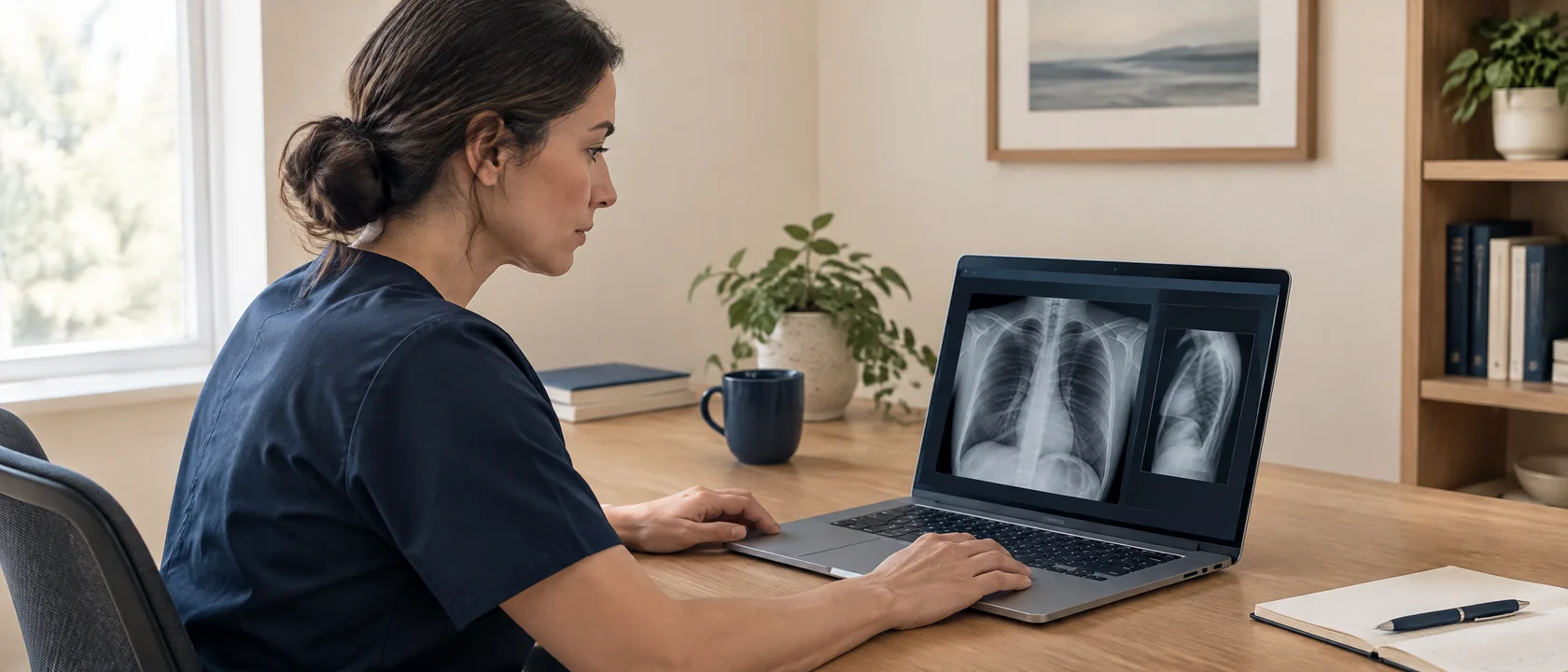
- •Medical data annotation and ground truth. Clinicians label imaging, clinical text and other medical data, with independent review and senior adjudication where a task needs it.
- •Clinical training data and expert feedback. Clinician-written examples, reference answers and structured feedback on model responses.
It also runs focused work for specific products: AI scribe evaluation, medical imaging annotation across radiology, ophthalmology, pathology, dermatology and endoscopy, and psychiatric and mental health data labelling.
Why clinicians and data scientists, together
Good clinicians are essential, but they are only half of it. Two experienced doctors can look at the same image or the same AI answer and reach different conclusions. Without a sound review design, that disagreement quietly becomes noise in your data.
DeepLabel pairs its clinicians with PhD data scientists. They agree the review criteria with you, decide when a task needs more than one independent reviewer, measure how often reviewers agree and resolve the cases where they don't. The result is data and findings you can defend, not just a spreadsheet of opinions.
"Clinicians bring the judgement healthcare AI needs, but judgement on its own isn't data. Pairing our specialists with PhD data scientists means every label and every finding can be measured, explained and trusted." Dr Azeem Alam BEM, Founder of DeepLabel
Where BiteLabs comes in
DeepLabel's specialists come from the BiteLabs network of more than 30,000 clinicians and healthcare professionals. That is what lets it match a task to the right specialty quickly, whether that is a consultant ophthalmologist, a psychiatrist or an emergency medicine registrar.
Every reviewer's professional registration and experience is checked before they join. Clinicians in our community can apply to join DeepLabel's specialist panel and take on paid, remote projects in their specialty.
Who it's for
- •Medical imaging and diagnostic AI companies building or validating models.
- •Teams developing clinical LLMs, copilots and healthcare AI agents.
- •AI scribe and clinical documentation companies.
- •Mental health technology and digital therapeutics companies.
What working with DeepLabel looks like
- 1.You explain what you're building. An outline is enough to start; you don't need a finished plan.
- 2.DeepLabel designs the approach. The right specialists, the review method, the criteria and the deliverables, agreed before work begins.
- 3.You get results you can use. Structured datasets, evaluation findings or expert feedback, with the quality checks the project needs.
It's just as clear about what it doesn't do. DeepLabel doesn't build or train your model, and its evaluations support product development rather than certifying clinical safety or replacing regulatory validation.